Print and Apply
The Nexus Australia print and apply system prints each label on demand and applies it automatically to the product or package as it passes. It is used in manufacturing and logistics to label goods before dispatch. The system combines a print engine, a label web and an applicator into one unit, which is why it is also called a label printer and applicator, a print and apply labeller or simply a print and apply machine. Nexus Australia supplies print and apply labelling systems Australia-wide.
When you need print and apply rather than a standard applicator
A standard labelling machine dispenses pre-printed labels from a roll. Every label is identical, which is fine for a retail bottle where the artwork never changes mid-run.
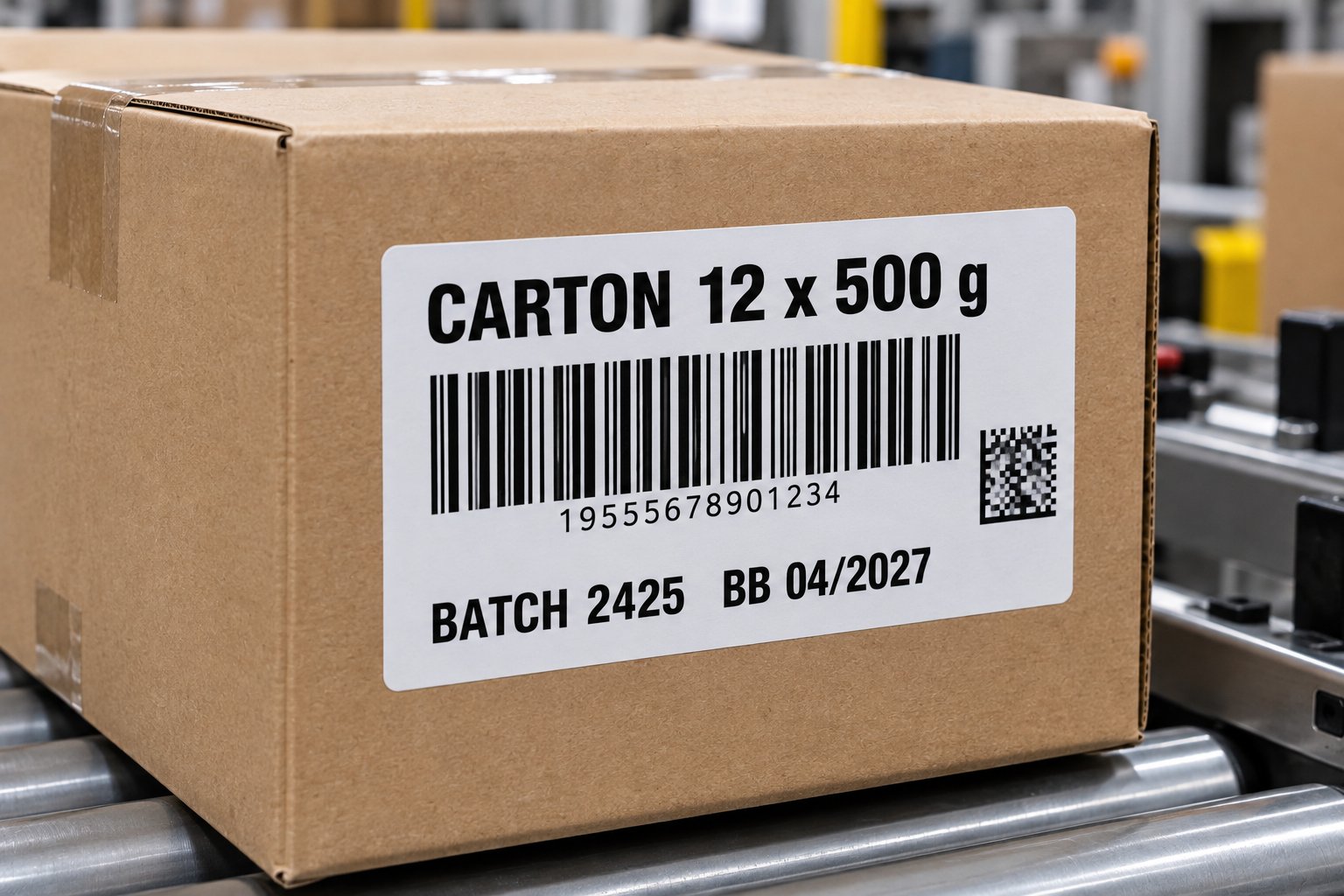
Print and apply labellers exist for the opposite case: where the label has to be different on every unit. A carton leaving a packing line carries a batch number, a weight, a use-by date and a shipping barcode that are unique to that carton. No pre-printed roll can do that, so the label has to be printed at the moment it is applied. That is the whole reason the category exists.
If your labels are identical across the run, a standard applicator is cheaper and simpler. If they carry variable data, you need print and apply. For the carton-side view of that decision, read our guide to box and carton labelling machines.
How a print and apply machine works
The sequence is short. A sensor detects the incoming pack. The print engine prints the label with that unit's data, pulled live from your line system or a database. The label is peeled from its backing web. The applicator then places it on the pack, either by a tamp pad that extends and presses it on, by a blow-on head that fires it across a small air gap without contact, or by a wipe-on roller for a moving surface.
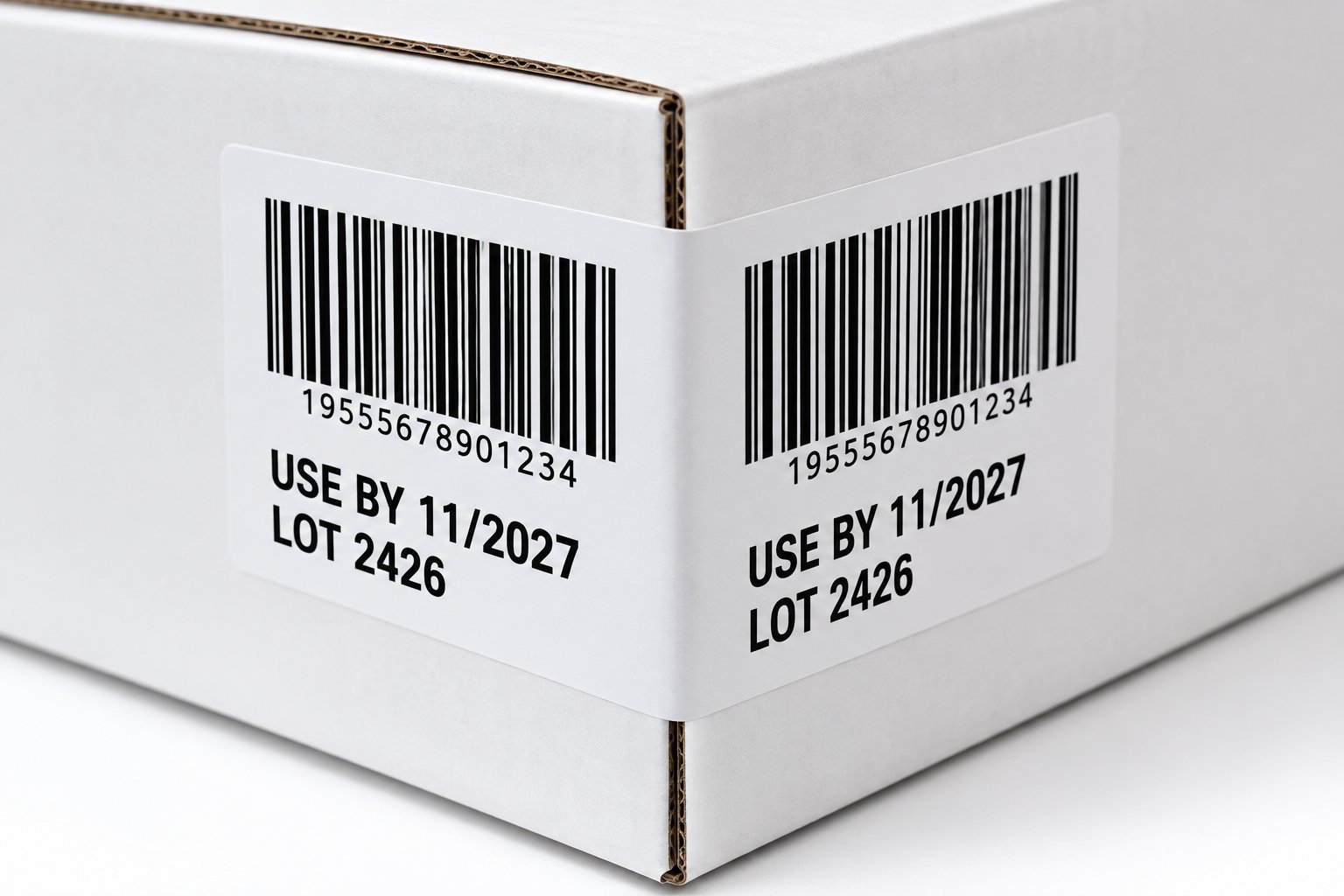
Which applicator suits your line depends on how the pack presents itself, whether the surface is stable enough to touch, and how much time there is between packs. Our guide to print and apply applicator types covers tamp, tamp-blow, blow-on, wipe-on, corner wrap and pallet applicators in detail.
Where print and apply is used
- Carton and case labelling: a print and apply case labeler applies content, batch and barcode labels to cartons on the packing line.
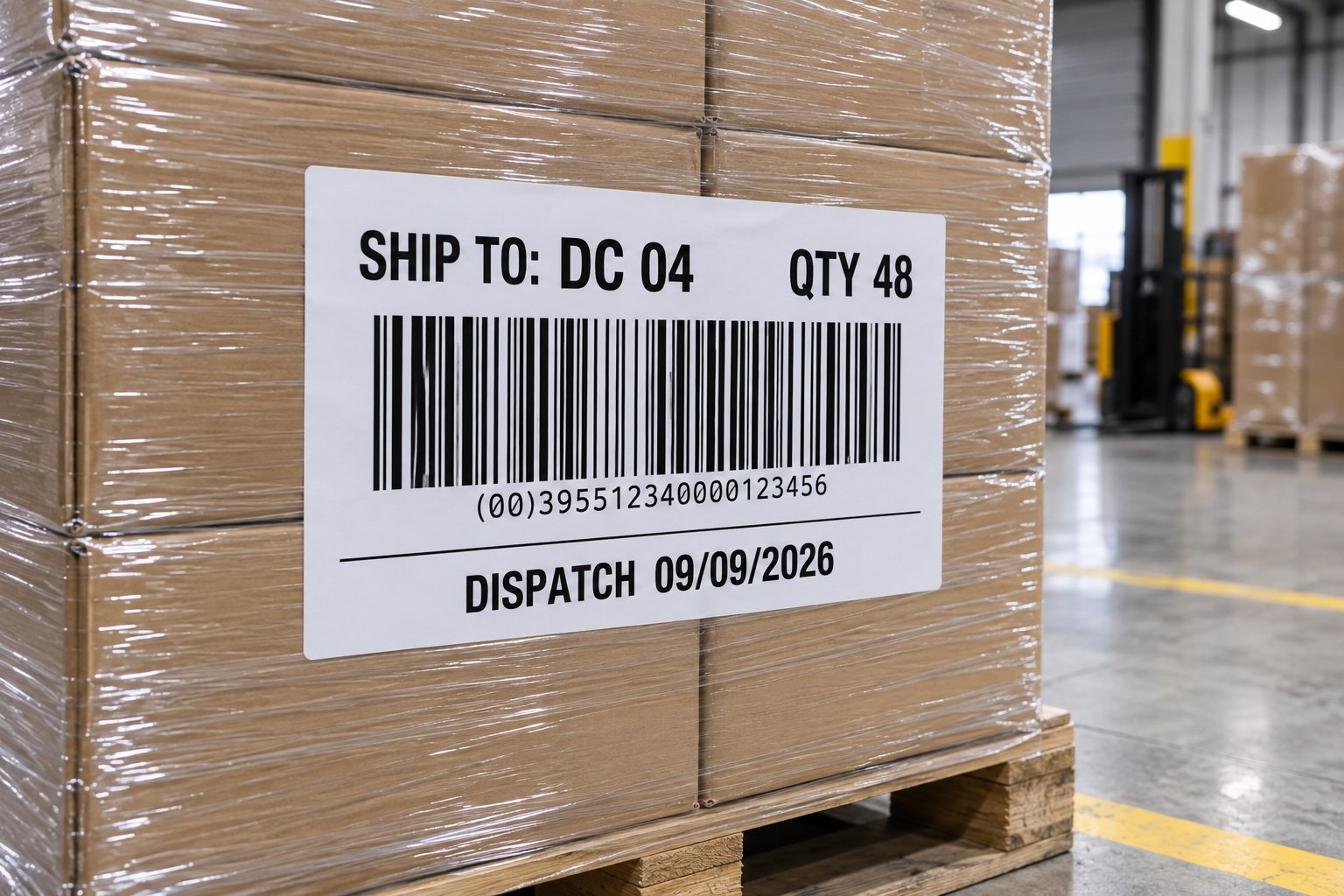
- Pallet labelling: a pallet label applicator applies dispatch and SSCC labels to finished pallets before they leave the site, often on two or three adjacent faces. Pallet labelling systems are usually specified around how many faces must be labelled and how fast pallets leave the wrapper.
- Box labelling: a label applicator machine for boxes handles mixed-size cases on the same line.
- Retail and compliance: weight, price and ingredient labels where the data changes per unit.
What it prints
- Batch or lot numbers for traceability.
- Expiry and use-by dates for perishable goods and pharmaceutical products.
- Barcodes, QR codes and data matrix codes for inventory and track-and-trace.
- Manufacturing dates for time-sensitive products.
- Serial numbers for product identification and authentication.
- Weights and pricing for retail labelling.
- Text, warnings and compliance panels for consumer goods.
- Brand logos and graphics.
Print engine and consumables
Most print and apply printers use a thermal transfer print engine, the same core technology covered on our thermal transfer printer page. An automatic label printer and applicator of this type runs a thermal transfer label printer inside the applicator housing, so print quality matches a standalone desktop unit while the applicator handles placement.
Consumables are thermal transfer ribbons plus thermal transfer or direct thermal labels. Ribbon choice is not a detail. Wax suits paper labels in dry storage. Wax-resin handles the coated papers and light synthetics most cartons use. Full resin is for synthetic labels that face moisture, abrasion, freezing or chemical contact, such as chilled and frozen goods or drums. Getting this wrong is the single most common cause of labels that scan on the line and fail at the depot.
Speed and integration
Print and apply systems are specified by how many packs per minute they must keep up with, and by how much data has to print on each label. A dense label with a large barcode takes longer to print than a simple date code, so throughput is a function of both line speed and label content.
The applicator normally takes its data live from your ERP, WMS or line control system, so labels reflect what is actually in the pack rather than what was scheduled. For a fuller explanation of how the print engine and applicator work together, see our guide to print and apply labelling.
Support, warranty and delivery
A print and apply system from Nexus comes with installation and commissioning by our own technicians, in any Australian state or territory. Where the line is large or unusual, the manufacturer's engineer joins the Nexus team on site. Machines have gone in at Perth, Melbourne, Shepparton, Sydney, Brisbane and Adelaide over the last three years, and Nexus also ships to New Zealand.
Every machine Nexus supplies is supported after handover: operator training, preventive maintenance, spare parts and technical help. When a Nexus machine breaks down, phone and video-call troubleshooting come first and cost nothing. If the fault needs hands on it, a Nexus technician or an approved contractor in your state attends. Common spare parts are held in Australia. Warranty is 12 months return-to-base, wear parts excluded.
Typical lead time to shipment is about 75 days for a standard machine and 90 to 120 days for a complex one, then freight and installation. All pricing is by quotation. Nexus Australia is a member of APPMA, the Australian Packaging and Processing Machinery Association.
Related coding and marking systems
- Continuous inkjet (CIJ) printers
- Thermal inkjet (TIJ) printers
- Laser coding systems
- Thermal transfer overprinters
- Valve jet printers
- Large character inkjet printers
Tell us your pack format, line speed and what data each label has to carry, and we will specify the system. Contact Nexus Australia for a quote on a print and apply labelling system.
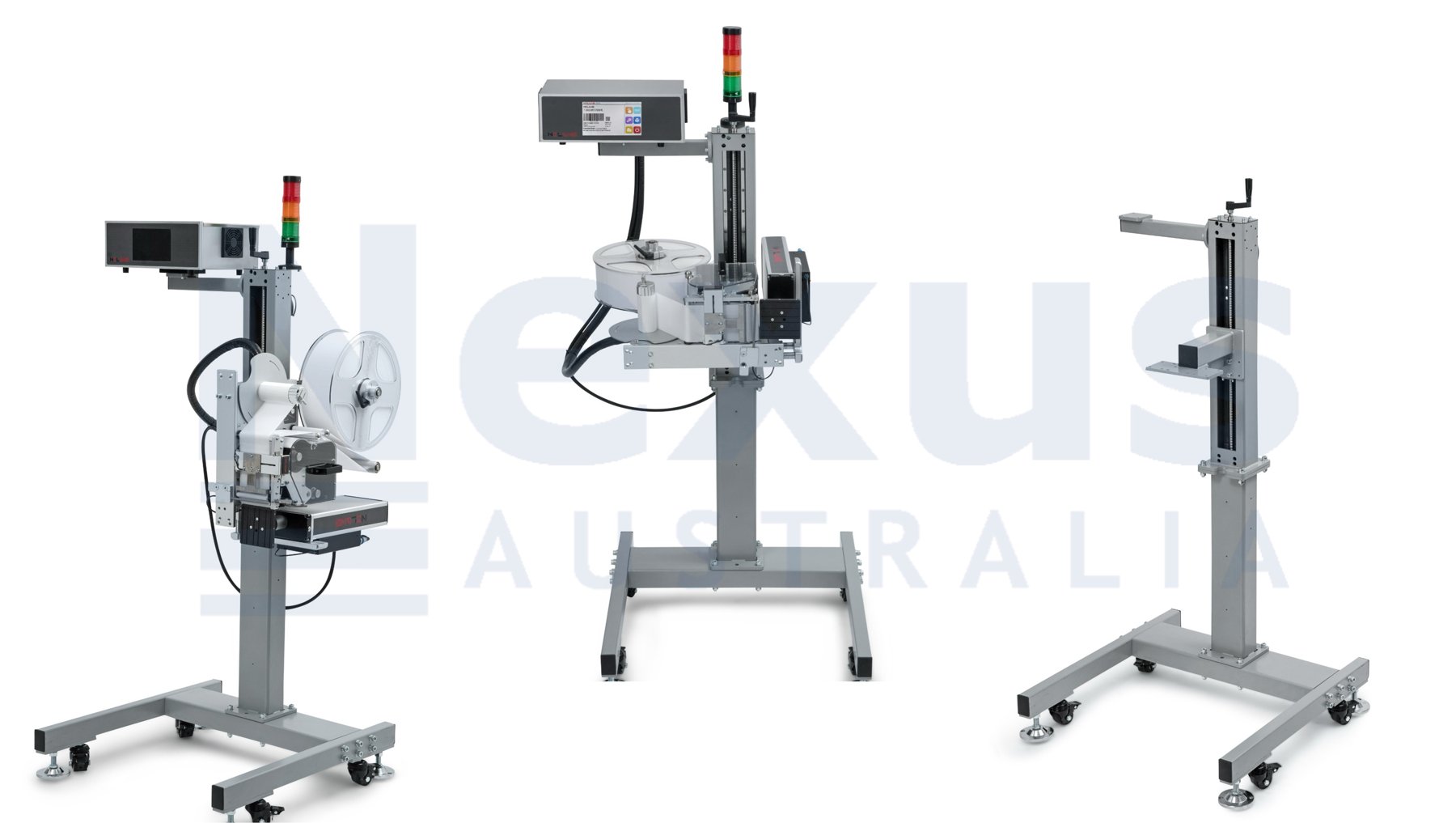
Print and Apply
You might also be interested:
Ready to Automate Your Production Line?
Talk to our packaging machinery experts today. Whether you need a standalone filling machine or a complete turnkey robotic system, we have the engineering expertise to scale your operations.