Labelling System
A labelling system applies labels to bottles, jars, containers and packs accurately and at speed. Nexus Australia supplies and supports labelling machines Australia-wide for production lines of every size. Options range from a benchtop semi-automatic labeller to a fully automatic label applicator running inline, with product label applicator configurations for bottles, jars, tubs and retail packs.
System or machine: what the difference actually is
A single labelling machine applies one type of label to one part of the product. A labelling system is the integrated set of stations that gets every label onto every unit as it moves down the line, which on most sites means more than one applicator. A bottle might take a wrap-around label at one station, a back label at the next, and a carton label at end of line. Specifying the system rather than one machine is what stops those stations fighting each other over line speed and container handling.
Automatic labeling systems and label application systems are the same thing under different names, in both the Australian and American spelling. If you only need one applicator, the labelling machine page covers that on its own.
Labelling machines we supply
- Labelling machines and label applicators: pressure-sensitive top, wrap-around and front-and-back labelling for bottles, jars and pouches.
- Shrink sleeve applicators: full-body shrink sleeve labels, tamper bands and multi-pack sleeves.
- Semi-automatic labelling machine: benchtop labelling for lower volumes.
- Print and apply systems: on-demand label printing and application for cartons, cases and pallets.
Types of labelling system
- Automatic labelling systems: containers are fed from the conveyor and labelled continuously at production speed, with no operator handling per unit. This is the standard configuration for medium and high volume lines.
- Semi-automatic systems: operator-fed one container at a time, suiting short runs, many SKUs and trial batches. See semi-automatic versus fully automatic packaging machines for where the crossover sits.
- Industrial labelling systems: built for continuous production duty, with the container handling, sensors and frame specified for sustained line speeds rather than intermittent use.
- Integrated labelling systems: the labelling stations are tied into the wider line so filling, capping, labelling and coding run as one sequence rather than as separate islands with manual transfer between them.
Print and apply labelling systems
Where the label has to change on every unit, a standard applicator dispensing pre-printed labels cannot do the job. Print and apply labelling systems print each label on demand and apply it immediately, so every label can carry a different batch number, weight, barcode or destination.
This is the normal answer for carton and case labelling on the packing line, and for pallet labelling systems applying dispatch labels to finished pallets before they leave. Our explainer on print and apply labelling covers how the print engine and applicator work together, and the print and apply range covers the equipment.
Label application methods
The application method is set by container shape and where the label has to sit: wrap-around for round bottles and jars, front and back for oval and flat-sided containers, top or top-and-bottom for trays, punnets and lids, and dual-sided for simultaneous both-side application. Our guide to label applicator types covers which suits which container.
Why automate labelling?
- Accuracy: consistent label placement with no wrinkles or misalignment.
- Speed: keeps pace with filling and capping on the line.
- Versatility: handles round, oval and flat containers and different label types.
- Traceability: variable data such as batch codes and barcodes applied and recorded consistently across every unit.
Specifying a labelling system
Work through four things: the containers and their shapes, the labels and where each one sits, the throughput you need now and in two years, and how many SKUs run through the line and how often you change over. Those four decide the number of stations, the application methods and the level of automation. Manufacturing labelling systems that run many SKUs need quick-adjust tooling more than they need raw speed.
Pair labelling with filling and capping systems for a complete bottling line, and code with a date coder. Contact Nexus Australia to specify a labelling system for your line.


You might also be interested:
Nexus High Speed Twin Head Labelling System
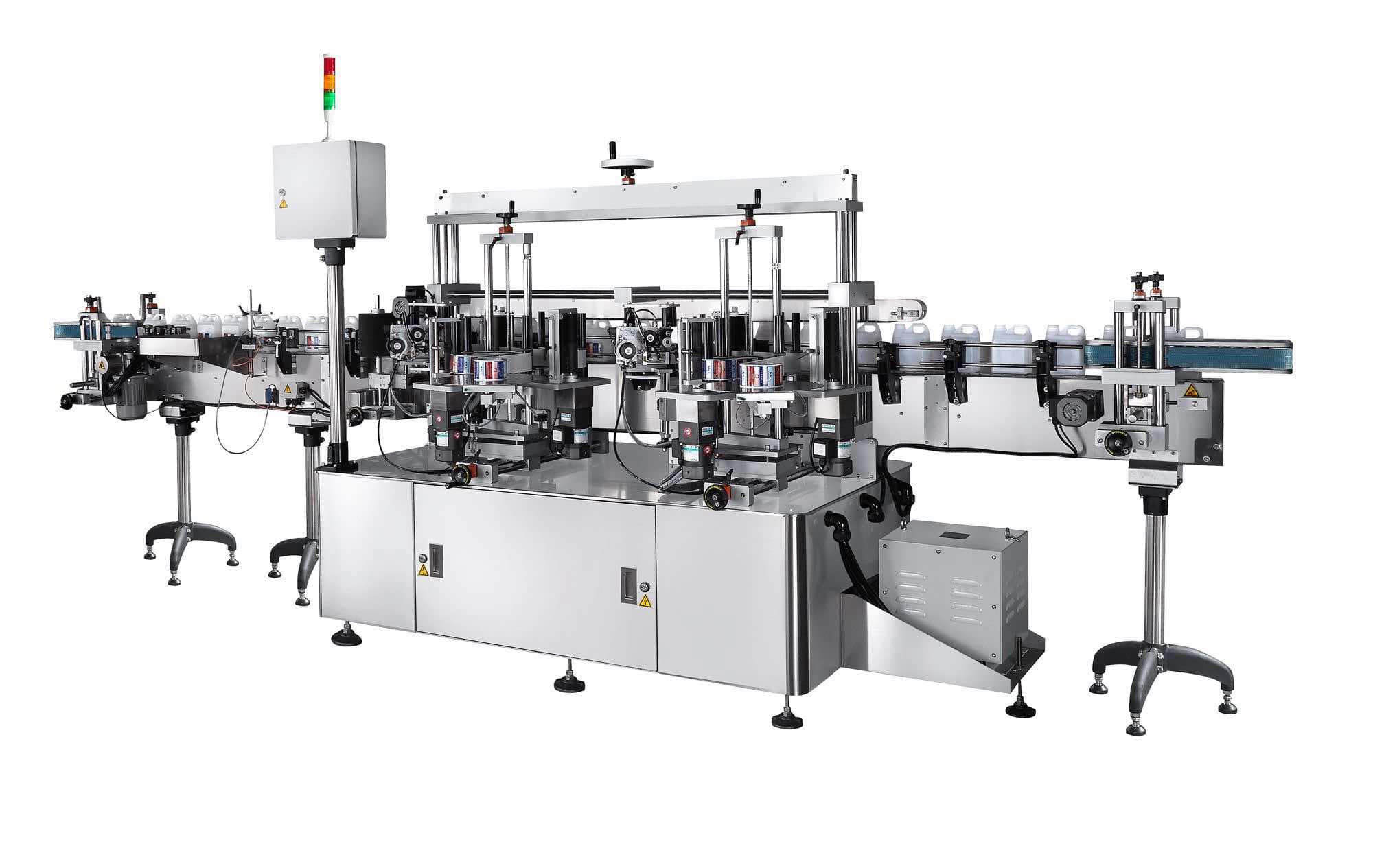
Dual servo twin-head bottle labeller, up to 120 bottles per minute
Read moreFully Automatic Top and Bottom Labelling Machine

Top and bottom labeller for boxes, cartons and flat packs, up to 60 per minute
Read moreHigh Speed Punnet / Trays Labelling Machine

Punnet, tub and tray labeller with denester and accumulator, up to 100 per minute
Read moreAll in One Labelling Machine

Front, back and wrap-around labeller for bottles and jerry cans, up to 50 per minute
Read moreReady to Automate Your Production Line?
Talk to our packaging machinery experts today. Whether you need a standalone filling machine or a complete turnkey robotic system, we have the engineering expertise to scale your operations.