Bagging System
A bagging system forms, fills and seals bags, pouches and sachets from flexible film at speed. Nexus Australia supplies automated bagging machines Australia-wide for food, pharmaceutical, hardware and consumer-goods manufacturers.
What a bagging machine does
A bagging machine takes two inputs, a roll of flexible film and a bulk product, and turns them into finished sealed packs. The film is formed into the bag shape, a dosing system meters product into it, heated jaws seal it and a cutter separates each pack. Everything else is variation on that sequence: whether the film is formed vertically or horizontally, how the product is dosed, and what shape the finished bag takes.
Because the bag is made on the machine rather than bought pre-made, a bag filling machine of this type gives lower packaging cost per unit at volume. Where you would rather fill ready-made bags or pouches, that is a premade pouch filling machine instead.
Bagging machines we supply
- VFFS (vertical form fill seal): forms and fills bags from a vertical film tube.
- HFFS (horizontal form fill seal): horizontal forming and filling for varied products.
- Flow wrappers: continuous horizontal wrapping into pillow packs.
- Sachet packing machines: small single-serve sachets of powders, liquids and granules.
- Stick pack machines: narrow multi-lane stick sachets.
Small bag filling equipment and where it fits
Not every operation needs a high-speed line. A small bag filling machine handles lower volumes and smaller pack sizes, which suits growing producers, specialty food manufacturers and anyone running many products in short batches. Small bag filling equipment is normally specified around changeover speed rather than raw output, because a line running eight products a week loses more time to format changes than to cycle time.
At the other end, multi-lane and high-speed configurations run several packs per cycle for steady, single-product volume. The semi-automatic versus fully automatic comparison covers where that trade-off falls.
Dosing: the part that decides accuracy
The bagger forms and seals the pack, but the dosing system decides whether the fill weight is right. It is matched to the product, not to the bag.
- Auger filler: powders such as spices, drink mixes and pharmaceutical powders, dosed by counted screw rotations.
- Multi-head weigher: granules, snacks, nuts and discrete solids, weighed to target before dropping into the bag.
- Piston or pump filler: liquids, sauces and pastes, dosed by volume.
- Volumetric cup: free-flowing product where speed matters more than gram-level accuracy.
How to choose a bagging system
- Bag format: pillow, gusseted, stand-up, sachet or stick pack.
- Product: powders, liquids, granules or solids, each suiting a different dosing method.
- Speed: from entry-level output to high-speed multi-lane production.
- Changeover: how many formats run on the line and how often it switches between them.
Vertical suits free-flowing product into simple bag shapes at speed. Horizontal suits flat, fragile or awkward products and more complex pouch styles. For the detail, read VFFS vs HFFS, or our guide to flow wrap packaging. To compare finished pack formats, see sachet vs stick pack vs pouch.
Match the bagger with the right dosing and filling system and the rest of the line follows. Contact Nexus Australia with your product, target bag format and output and we will specify the machine.


You might also be interested:
Rotary Premade Pouch Packing Machine for Liquid
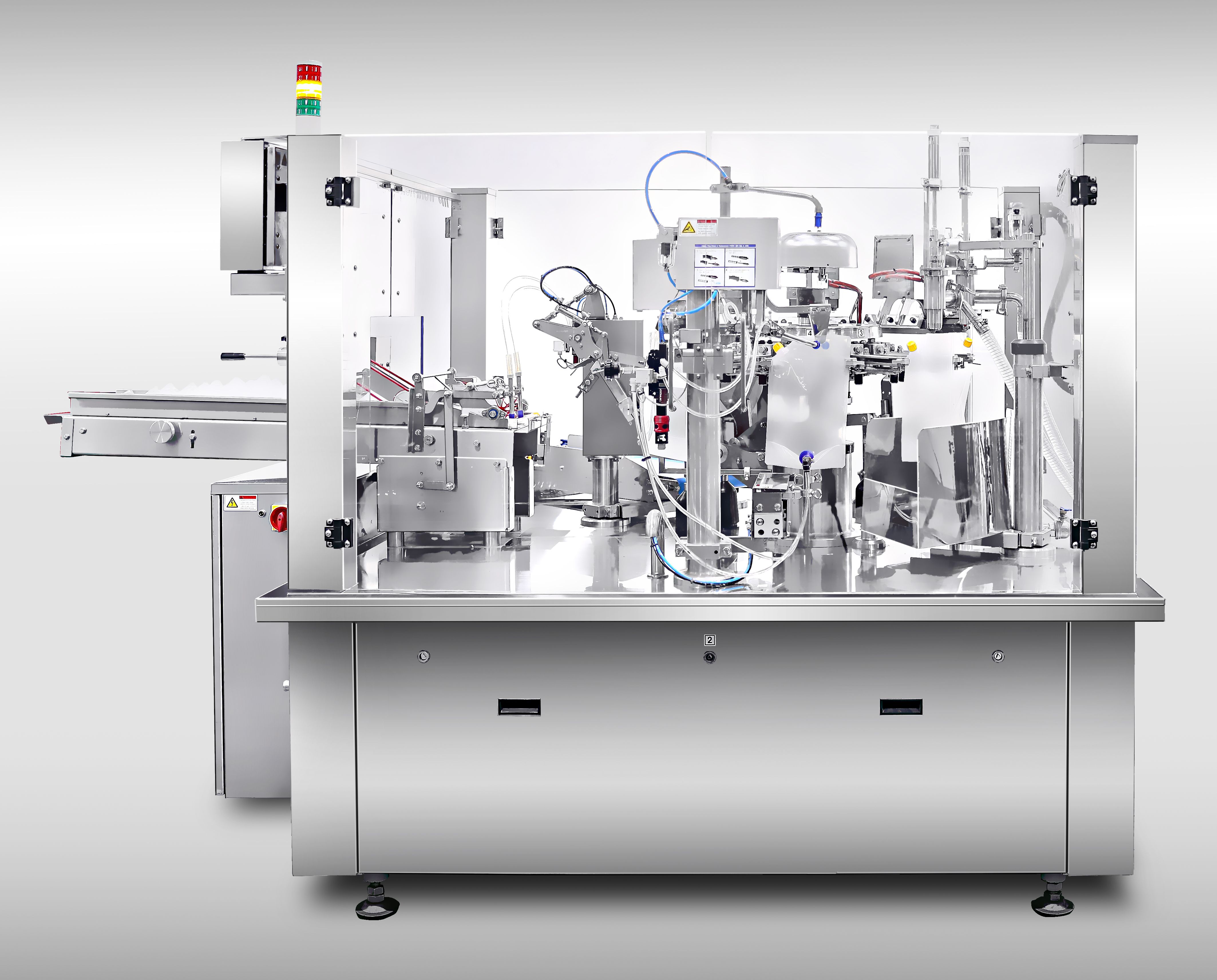
Premade Pouch Machine for Liquid
Read moreNexus Dual Auger Stand Up Pouch Machine with Dual Micro Auger

Premade stand-up pouch machine for powders with dual auger micro-dosing
Read moreNexus M2 Multi Lane Stick Pack Machine

Nexus M2 volumetric cup stick pack machine, dual lane up to ten lanes
Read moreReady to Automate Your Production Line?
Talk to our packaging machinery experts today. Whether you need a standalone filling machine or a complete turnkey robotic system, we have the engineering expertise to scale your operations.