Thermal Ink Jet
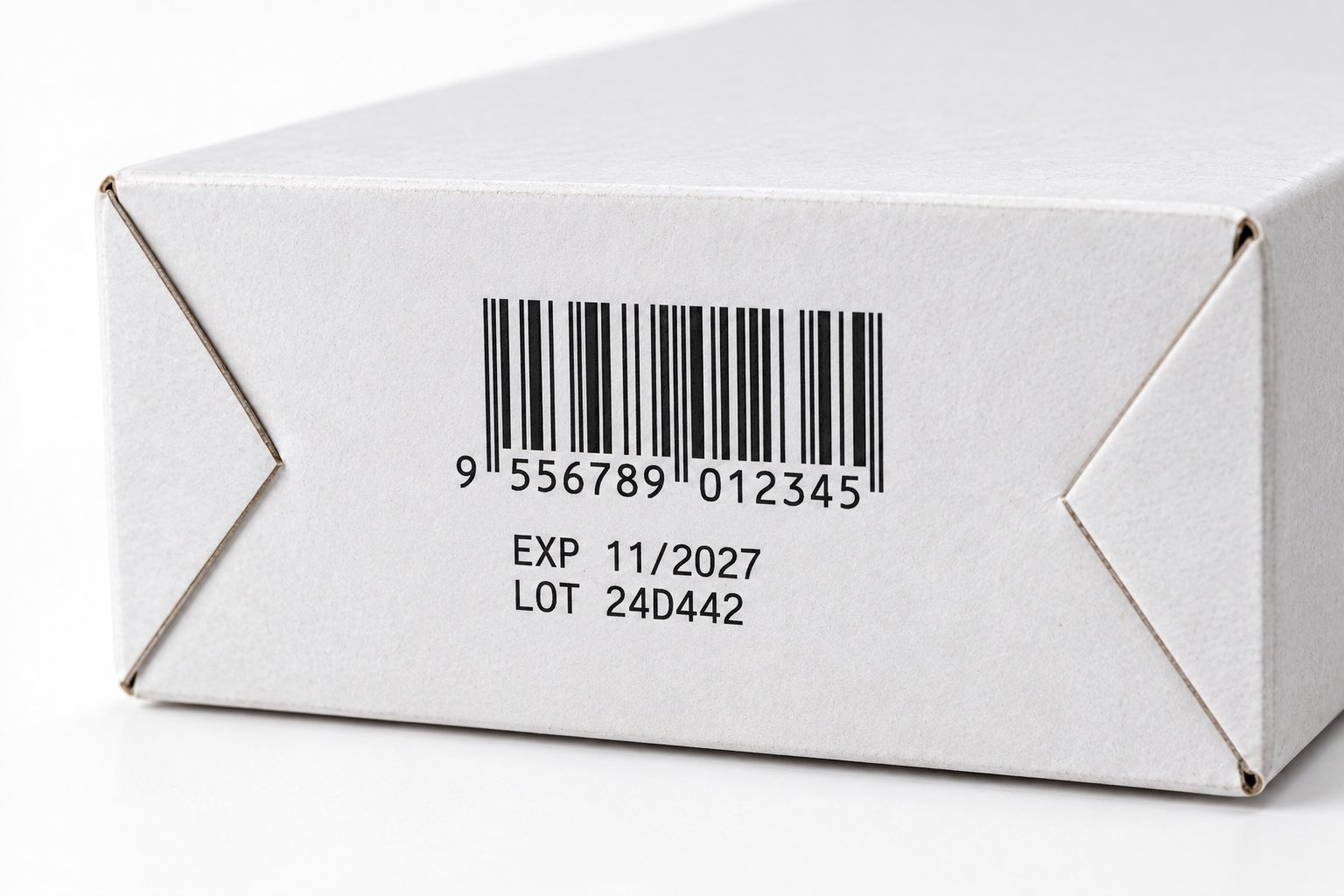
An industrial thermal inkjet printer (TIJ) is used for product labelling, packaging and coding. It prints text, graphics and barcodes on materials such as paper, cardboard, plastics and metals at high speed. Nexus Australia supplies and supports thermal inkjet printers Australia-wide.
How thermal inkjet works
TIJ heats small ink chambers in the printhead to create tiny bubbles, which expel ink droplets onto the surface. It is non-contact and prints directly from a replaceable ink cartridge. Because the droplet is fired by a vapour bubble, the technology is also known as a thermal bubble inkjet printer, and the two names describe the same method.
The important consequence of the cartridge design is that the printhead is part of the cartridge. When the cartridge is replaced, a brand new printhead goes on with it. There is nothing to clean, no nozzles to unblock and no solvent to top up, which is why TIJ has the lowest maintenance burden of any ink-based coder.
Thermal inkjet versus continuous inkjet
Both are non-contact ink technologies, and they suit different jobs.
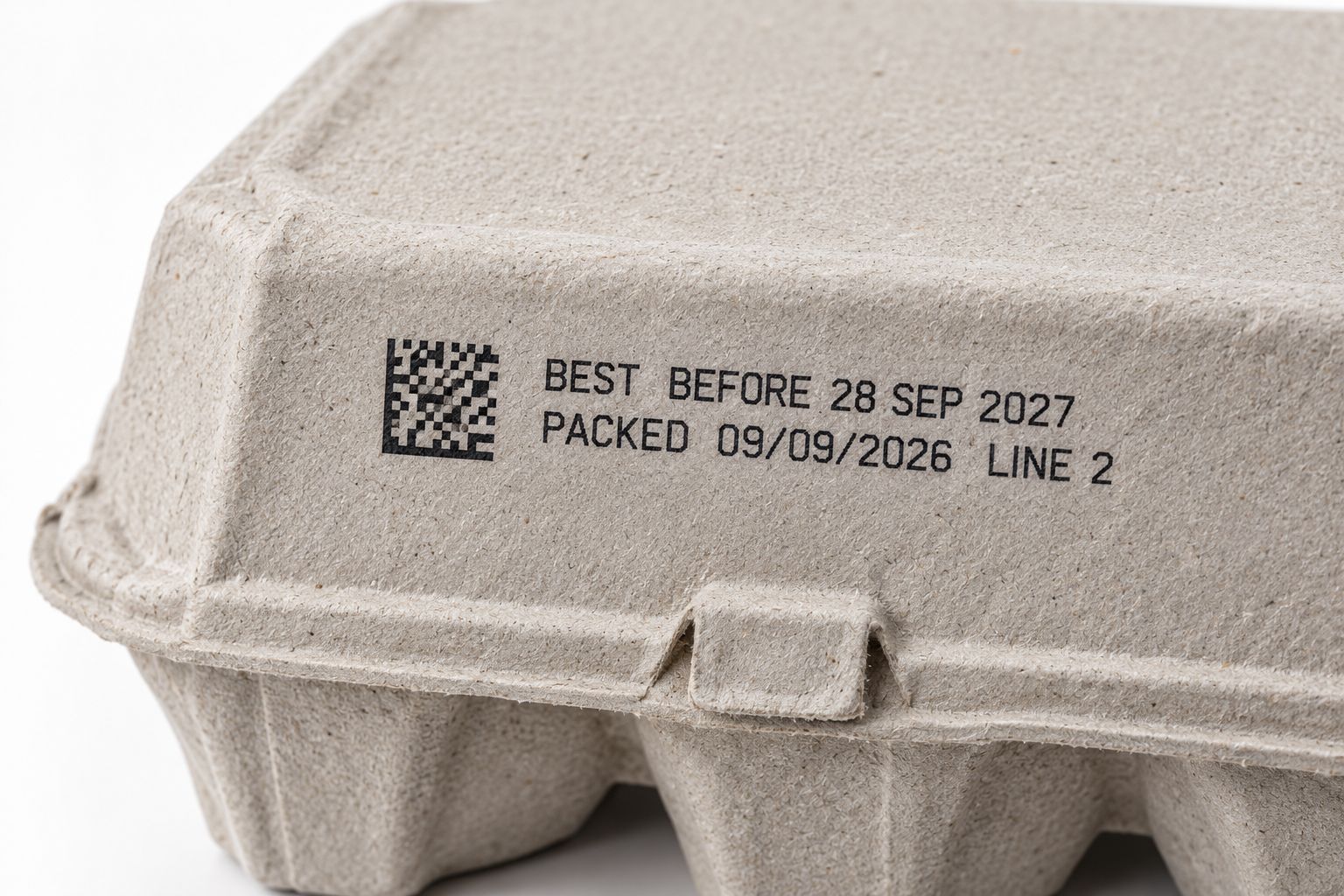
- Print quality: TIJ produces markedly higher resolution than CIJ, so it is the better choice where the code contains a barcode, a data matrix or small text that must scan reliably.
- Maintenance: TIJ has almost none, because the printhead is replaced with the cartridge. CIJ requires solvent, make-up fluid and periodic printhead servicing.
- Substrate: CIJ handles a wider range of difficult and non-porous surfaces, and copes better with curved or awkwardly presented product.
- Running cost: TIJ cartridges cost more per millilitre, so at very high volume CIJ or laser coding is usually cheaper per code.
The practical rule: choose thermal inkjet for high-resolution codes on cartons and packaging materials with low maintenance overhead, and continuous inkjet for fast lines and harder substrates. Our guide to continuous inkjet printers covers the alternative in detail.
Thermal inkjet printers for food packaging
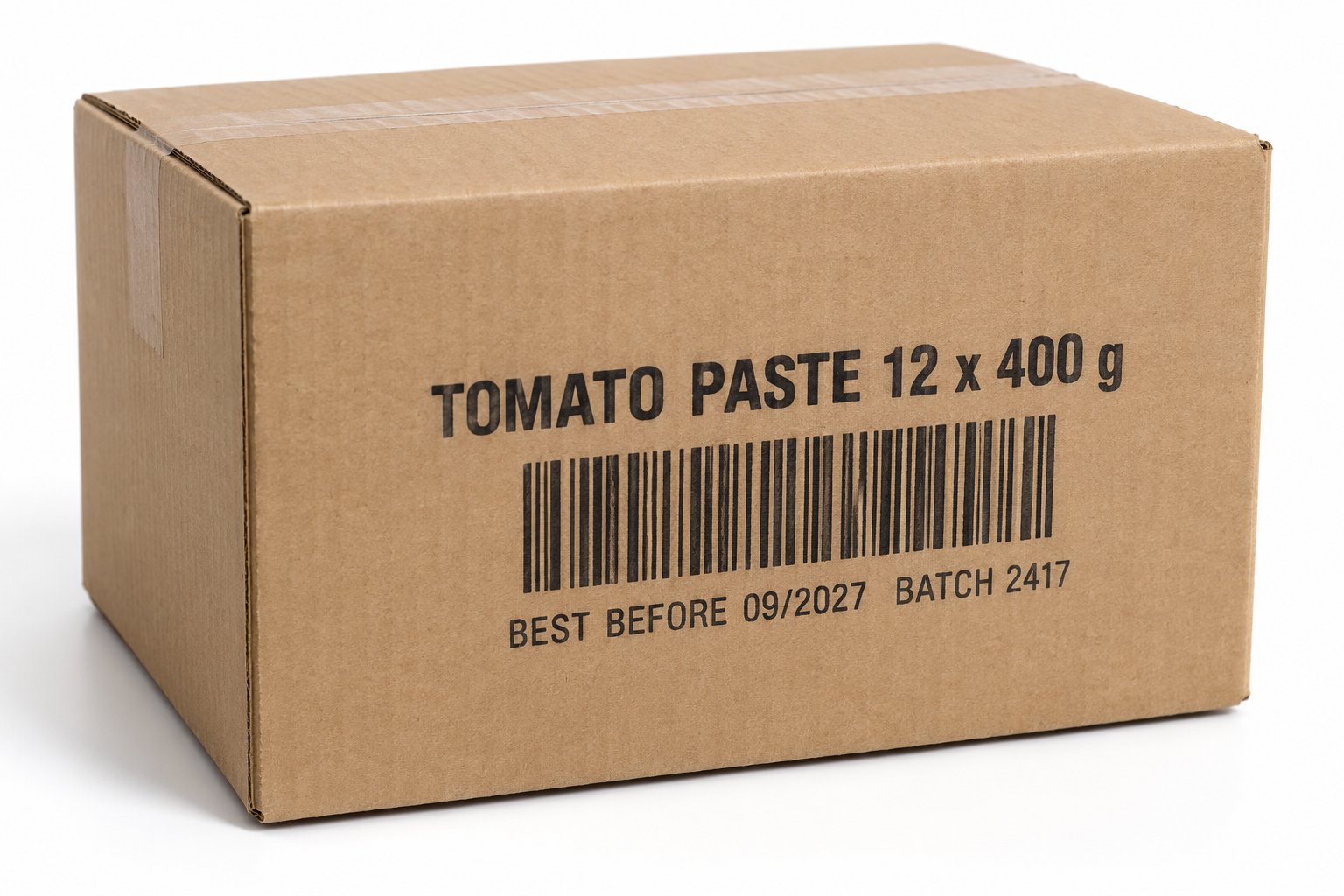
Food production is the most common application. Thermal inkjet printing on packaging materials suits cartons, corrugated cases, folding carton, paper labels and many flexible films, which covers most secondary food packaging.
For direct food-contact and food-adjacent printing, ink selection matters. Inks are chosen for the substrate and for the regulatory requirement of the application, so tell us what the pack is and what it contains before the printer is specified. The clean, solvent-free operation of TIJ is also a practical advantage in food environments where solvent handling and odour are a concern.
Substrate
Thermal inkjet is commonly used on packaging materials such as coated and uncoated paper, cardboard, corrugated boxes, synthetic materials, plastics, wood and some metal surfaces for product identification and coding. Some non-porous substrates are also suitable.
Capability
- High-quality printing.
- Batch or lot numbers for product traceability.
- Expiry dates for perishable goods.
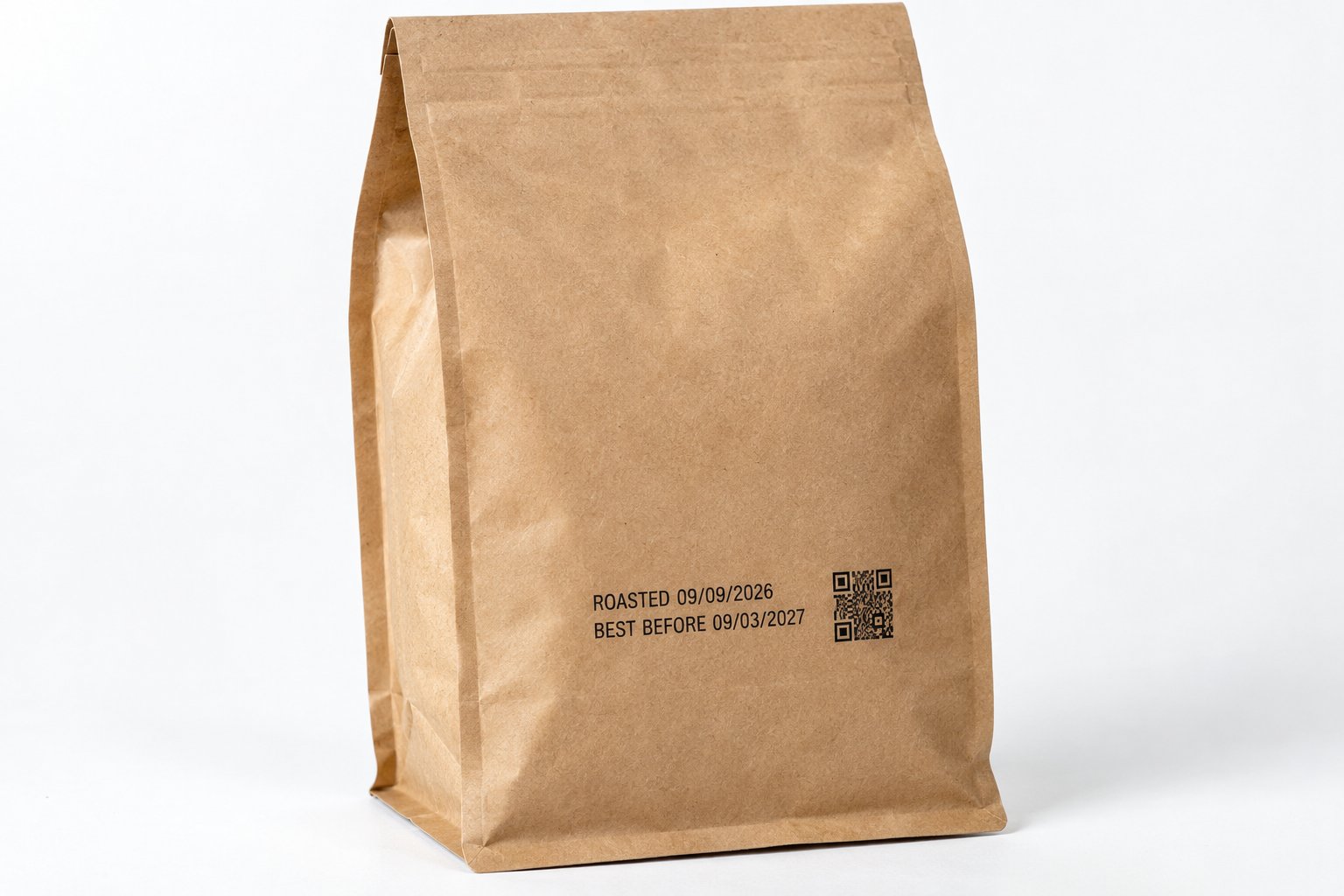
- Barcodes and QR codes for inventory and tracking.
- Manufacturing dates for time-sensitive products.
- Serial numbers for individual product identification.
- Logo and branding elements.
- Ingredient lists and nutritional information on food packaging.
- Warning labels and safety instructions on consumer products.
- Variable data for personalised marketing or packaging.
- Production codes for quality control and process tracking.
Speed
Thermal inkjet printers print from low up to high speed applications.
Consumables
TIJ inks cover a broad spectrum of applications to suit different substrates, with a choice of ink colours. Consumables are supplied as sealed cartridges, so there is no bulk ink or solvent to store, decant or dispose of.
Specifying a thermal inkjet coder
Four things decide it: the substrate, whether the code includes a barcode or data matrix that has to scan, the line speed, and how many codes per day the line produces. That last one matters more than people expect, because cartridge cost per code is what separates TIJ from CIJ at volume.
Related coding and marking systems
- Continuous inkjet (CIJ) printers
- Laser coding systems
- Thermal transfer overprinters
- Valve jet printers
- Large character inkjet printers
- Print and apply labelling
Tell us your substrate, code content and daily volume and we will specify the printer. Contact Nexus Australia for a quote on a thermal inkjet printer.
Thermal Ink Jet
You might also be interested:
Ready to Automate Your Production Line?
Talk to our packaging machinery experts today. Whether you need a standalone filling machine or a complete turnkey robotic system, we have the engineering expertise to scale your operations.