


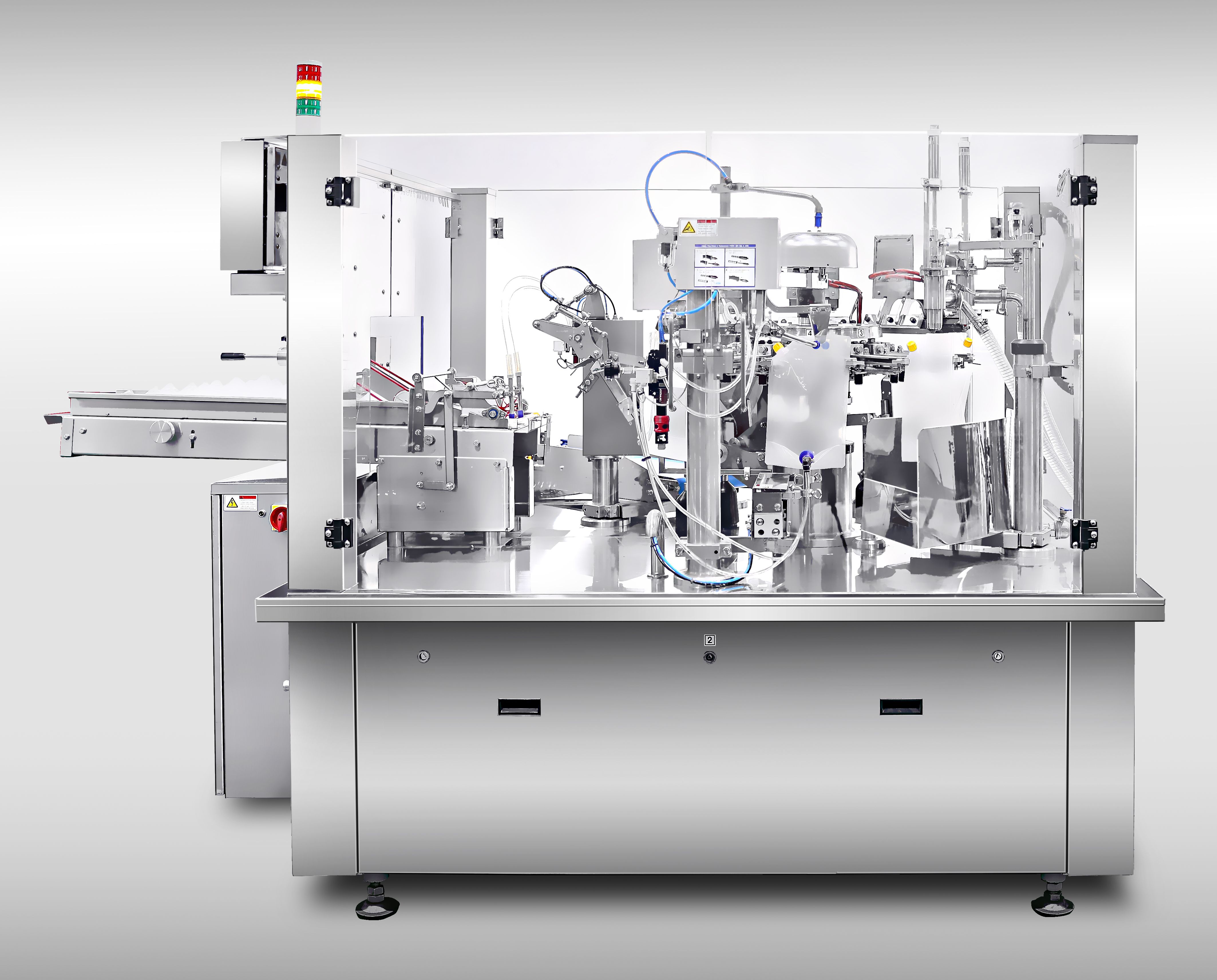
HFFS - Horizontal Form Fill and Seal
Horizontal Form Fill and Seal (HFFS) machines shape, fill, and seal packaging materials horizontally. They are used across the food and beverage, pharmaceutical, cosmetics, and household product industries. Also known simply as a horizontal form fill seal machine, it forms each pouch from roll film in one continuous horizontal process.
What HFFS packaging means
HFFS packaging describes any pack made on a horizontal form fill seal (HFFS) machine: the film runs flat rather than being drawn down a vertical tube, the pouch is formed lying down, and product is dropped or pumped in before sealing. Running horizontally is what lets these machines produce shaped and structured packs that a vertical machine cannot, including stand-up pouches, spouted pouches, zip-lock bags and twin-compartment packs.
The practical trade-off against a vertical machine is product behaviour. Horizontal form fill seal (HFFS) machines suit flat, fragile, sticky or awkwardly shaped products that need to be placed rather than dropped, and any pack style with a defined shape. Free-flowing product into a simple pillow bag is usually faster and cheaper on a VFFS machine. Our comparison of VFFS vs HFFS covers the decision in full.
HFFS is also distinct from flow wrapping. A flow wrapper wraps an already-formed product in a continuous film pillow pack, while HFFS forms a pouch and fills it. Where the pouches are bought ready-made rather than formed on the machine, that is a premade pouch filling machine.
How it works
- Film feeding: packaging film is fed from a roll.
- Forming: the film is shaped into the desired bag or pouch configuration.
- Dosing: product is dispensed into the pouches using one of the dosing methods below.
- Sealing: the packaging is sealed using methods such as heat sealing, ultrasonic sealing, or pressure sealing.
- Cutting: individual packages are cut from the continuous film into separate units.
Form fill seal packaging and horizontal FFS systems
Form fill seal packaging is any pack where the machine forms the container from film, fills it and seals it in one pass, as opposed to filling a premade container. A horizontal FFS system does this with the film travelling flat, which is what gives it the range of pouch shapes below. An HFFS pouch system is normally specified as a complete line: the film unwind and forming section, the dosing unit matched to the product, the sealing and cutting station, and an outfeed to coding and cartoning. Flexible HFFS packaging covers everything from a flat three-side seal sachet to a spouted stand-up pouch, on the same machine frame with a change of forming tooling. Nexus supplies HFFS machines for sale Australia-wide and specifies each system to the pouch style, product and output the line needs.
Pouch styles
- 3 side-seal: sealed on three sides, suited to products from snacks to confectionery.
- 4 side-seal: sealed on all four sides for added stability, suited to pharmaceuticals and personal care products.
- Twin pouch: two separate compartments in a single pouch for packaging distinct products together, often used for household cleaning products.
- Zip lock bag: a resealable zipper closure, suited to frozen foods and bakery items.
- Euro hole: a hole for hanging on retail hooks, optimising visibility and shelf space.
- Customised shape: tailored pouch shapes for specialty food products and cosmetics.
- Stand up bag / pouch: shelf visibility for snacks, pet treats, and other retail items.
- Stand up bag / pouch with zip lock: suited to products like baby food and dried fruits.
- Stand up bag / pouch with zip lock and punch hole: display options suited to hardware items and craft supplies.
- Spouted stand up pouch: for liquids or pourable products such as beverages and sauces.
- Corner spout bag: corner-positioned spouts for liquid and granular products such as cooking oils and detergents.
Dosing methods
- Servo auger powder filler: a servo-driven auger measures and dispenses powders.
- Servo piston liquid filler: a servo-driven piston measures and dispenses liquids.
- Servo solid volumetric cup filler: servo-driven volumetric cups measure and dispense solid products.
- Multi-head weighing system: high-speed, high-accuracy weighing using multiple heads.
- Vibratory solid feeder: vibration feeds solid products for consistent, controlled flow.
- Capsule/tablet counting system: counts and dispenses capsules or tablets, suited to pharmaceuticals and small items.
HFFS meat and protein packaging
Meat, poultry and seafood are among the most demanding products a horizontal machine handles, and they are a common reason producers choose HFFS over vertical. The product is flat, heavy for its size, wet and easily damaged, so it needs to be laid into a formed pouch rather than dropped down a forming tube. Four-side seal and stand-up formats give the seal integrity these products need, and the horizontal layout keeps portions presented flat and evenly positioned in the pack. Hygienic design matters more here than on most applications, with easy-clean surfaces specified to meet food safety requirements.
Features and benefits
- High efficiency: operates at speeds from 40 to 200 packs per minute.
- Versatility: accommodates diverse packaging formats, sizes, and types.
- Accuracy and consistency: consistent dosing, filling, and sealing for product quality and weight.
- Labour cost reduction: automation reduces manual labour.
- Hygienic design: easy-to-clean surfaces that meet food safety and hygiene standards.
- Customisation options: additional features such as printing for branding and labelling.
Applications
- Snack foods
- Bakery products
- Frozen foods
- Meat, poultry and seafood
- Confectionery
- Pharmaceuticals
- Personal care products
- Household items
Output
Operates at 40 to 200 packs per minute.
HFFS sits within the wider bagging system range. Contact Nexus Australia with your product, pouch style and target output for a configuration.
Frequently asked questions
How does an HFFS machine work?
A Horizontal Form Fill and Seal (HFFS) machine feeds packaging film from a roll, forms it into the desired bag or pouch, doses product into the pouches, seals the packaging, and cuts individual packages from the continuous film. Sealing methods include heat, ultrasonic and pressure sealing.
What pouch styles can it produce?
It produces a wide range of styles, including 3 side-seal, 4 side-seal, twin pouch, zip lock, euro hole, stand up pouches (with optional zip lock and punch hole), spouted stand up pouches, corner spout bags and customised shapes.
What dosing methods are available?
Dosing options include a servo auger powder filler, servo piston liquid filler, servo solid volumetric cup filler, multi-head weighing system, vibratory solid feeder and a capsule or tablet counting system. Nexus Australia matches the dosing method to your product type.
How fast does an HFFS machine run?
HFFS machines operate at speeds from 40 to 200 packs per minute, depending on the format and product. They suit food and beverage, pharmaceutical, cosmetics and household product applications.
Ready to move forward?
Get a tailored quote or talk through your requirements with our team.
Get a quote
You might also be interested:
Rotary Premade Pouch Packing Machine for Liquid
Premade Pouch Machine for Liquid
Read moreNexus Dual Auger Stand Up Pouch Machine with Dual Micro Auger

Premade stand-up pouch machine for powders with dual auger micro-dosing
Read moreNexus M2 Multi Lane Stick Pack Machine

Nexus M2 volumetric cup stick pack machine, dual lane up to ten lanes
Read more